


ElectionOpinion.com Desk Report
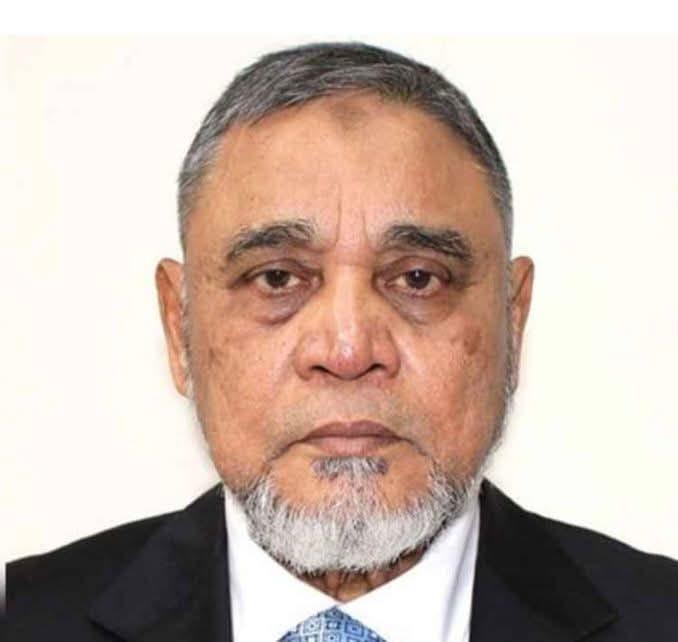
Under This Monitoring, a Genuine Election Is Not Possible — Public Demand Grows for Neutral Oversight
The office of the Chief Election Commissioner (CEC) is not a ceremonial chair. It is the constitutional nerve-centre of electoral legitimacy. When citizens cast their votes, they are placing trust in the impartiality of the institution that governs the process. That is why neutrality must be real — and it must be seen to be real.
Yet a serious question now dominates public discussion: is the Chief Election Commissioner politically neutral at all?
“No genuine election under his monitoring” — the demand on the streets and online
Across political and civic circles, a growing public sentiment is being expressed with unusual clarity: it is not possible to hold a genuine election under his monitoring. This is increasingly being framed as a public demand — not merely a partisan complaint — rooted in the belief that the Election Commission must be above political loyalty to command legitimacy.
This view, repeated in conversations, public commentary, and political discourse, reflects a deeper fear: once the referee is perceived to belong to one side, the match is considered fixed before it begins.
ElectionOpinion.com Desk Report notes that this perception is now central to the national conversation around electoral credibility and public confidence.
The central concern: neutrality is being questioned
A growing perception has taken root that the CEC is not acting as an independent referee, but as a figure aligned with the Bangladesh Nationalist Party (BNP). Many describe him as a staunch loyalist. Whether one agrees with this assessment or not, the consequences are the same: once the Election Commission is viewed as partisan, every decision becomes doubtful.
Voter list updates, nomination scrutiny, delimitation, enforcement of the code of conduct, deployment of officials — all of it begins to look politically motivated. And when trust collapses, elections lose their meaning.
A broken expectation: the legacy we hoped for
There was a time when Bangladesh expected Election Commissions to rise above the noise of party politics and leave a mark on history.
We believed this CEC would be remembered in the way people remember former CECs such as Justice Abdur Rouf or M.A. Sayed — not because every decision was perfect, but because the institution appeared to stand above party influence.
Instead, what we see now is disappointment: a Commission that increasingly looks trapped in political suspicion.
The deeper worry: bureaucratic loyalty disguised as public service
The concern becomes sharper when the public recalls how certain senior bureaucrats are seen as “trusted” by particular political camps.
Former Energy Secretary A.M.M. Nasir Uddin is often discussed as a figure who was highly favoured by Begum Khaleda Zia during his professional life. According to political understandings frequently referenced in public discussion, had the BNP contested the 2008 national elections independently, he was reportedly Begum Zia’s preferred candidate for the Cox’s Bazar-2 (Kutubdia–Maheshkhali) constituency under the ‘Sheaf of Paddy’ symbol.
However, due to the alliance-based election strategy, the seat had to be conceded to Hamidur Rahman Azad, a candidate of BNP’s ally, Jamaat-e-Islami.
That history matters because it shows something deeper: in Bangladesh, elections are not only shaped by voters — they are also shaped by alliances, seat-sharing, and political bargaining. When the Election Commission is perceived as leaning towards one side, citizens fear the Commission itself may become another layer of that bargaining.
Why this matters now
The Election Commission cannot function properly if a large portion of the electorate believes the referee belongs to one team. Elections are not only a legal process; they are a psychological contract between the public and the state. Once that contract is broken, the damage is long-term and national.
A credible Election Commission must: enforce rules equally against all parties.
publish clear reasoning for major decisions. protect the vote from manipulation and intimidation
keep a visible distance from political operators and backchannel influence.
History does not remember loyalists — it remembers referees
A Chief Election Commissioner does not earn legitimacy by pleasing parties. He earns it by proving that no party owns him.
Bangladesh does not need a Commission that “manages” elections. It needs a Commission that protects elections — and protects the people’s confidence in the ballot. And that is precisely why the public demand is growing: under his monitoring, a genuine election is not possible.
ElectionOpinion.com — Desk Report
Leave a comment
Your email address will not be published. Required fields are marked *